
MUST VISIT
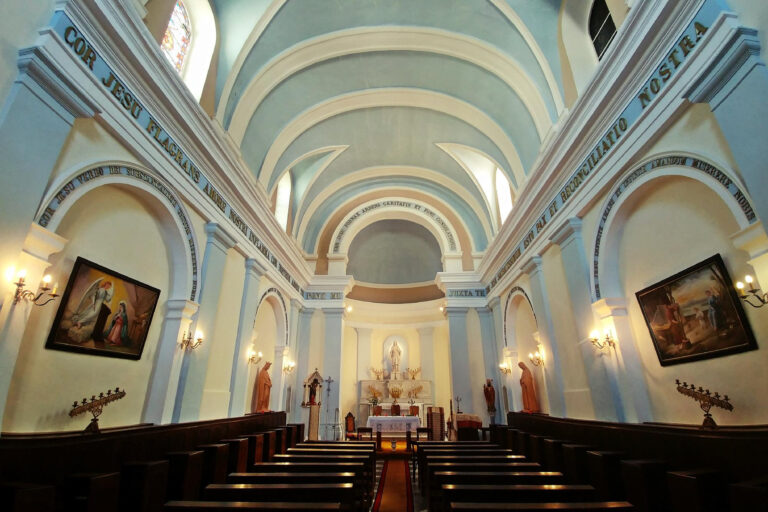
Ursulines monastery
The first Ursuline nuns arrived on the island of Tinos in 1704. Initially they settled in houses where they practiced their religious duties.
In 1862 the first organized monastery was founded in the village of Loutra by the Englishwoman Maria-Anna Leeves. The building complex included an orphanage, a boarding school, dormitories, classrooms, a library, a reading room and many more spaces. In the period 1876-1877, he received applications from all over the East to admit female students to the School. In the period 1910-1930 it flourished, with more than 300 female boarding school students of all denominations and religions from all over Greece living and studying at the monastery. During the 2nd World War, studying became difficult and in the years that followed many of the islanders left the island to look for better jobs elsewhere. At the beginning of the 1990s, all the departments were closed and the remaining nuns were transferred to the city of Tinos where they mainly engaged in pastoral ministry and human support.
Today the building complex houses the Primary school for the children of the surrounding villages. One part has been converted into a museum where the work carried out during the centenary operation is presented, while in the garden of the complex during the summer months, cultural events are held as part of the annual Festival
Volax village

The thousands of impressive smooth granite boulders, which are scattered in the area, create an almost lunar landscape, in a village that seems to balance artfully between myth and reality attracting the interest of scientists and visitors alike! No matter how many photos you take of this medieval village, there will never be enough! Between them the white houses create a spectacle of unprecedented architecture. Charming signs will lead you to the small theater, the 1886 fountain, the Catholic Church of the Nativity and the folklore museum!
Green Quarry of Koumelas
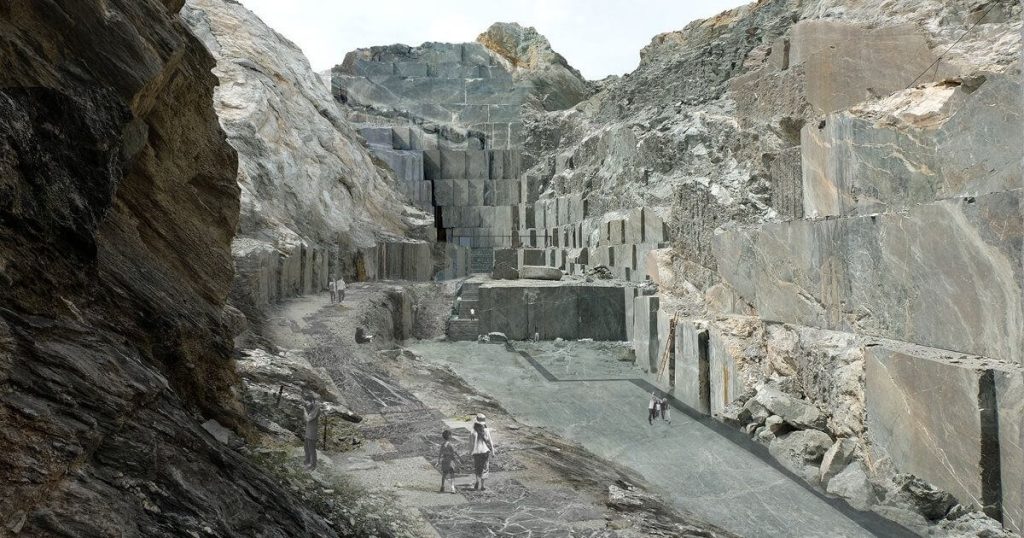
In Tinos there is also the well-hidden “Green Quarry” which is located in the northern part of the island almost opposite Andros at the location of Koumelas!
The “Green Quarry” is an old marble quarry that today the waves of the Aegean have taken it over and have created the largest marble pool in the entire Mediterranean!
Exombourgo
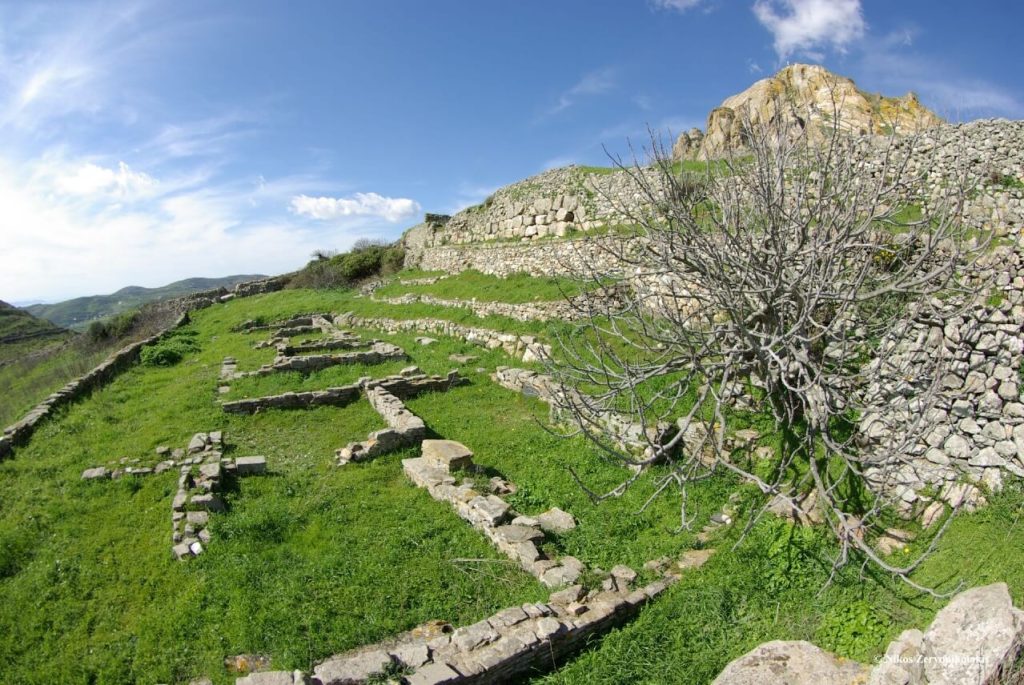
In the heart of Tinos, the island of the Cyclades with its rich cultural tradition, dominates Exombourgo or Xombourgo,an imposing hill with a magnificent view. It was founded in the 7th century BC on the hill of Exomburgos, inhabited probably since the Prehistoric Times. sanctuary dedicated to the goddess Demetra . The Venetians fortified the area, built warehouses, water tanks, towers, bastions, etc. and they made the castle, thanks also to the natural cliff of the location, a mighty fortress that was able to withstand for centuries the attacks of the Ottomans and corsairs .Below the hill of Exombourgo are the monastery of Kardias tou Iesou, from where the path leading to the top of the imposing rock begins, and the church of Agia Eleousis, next to the monastery. An attraction that you should definitely visit, climb it and admire the wonderful view but also its history!
Vryokastro / Ancient Acropolis
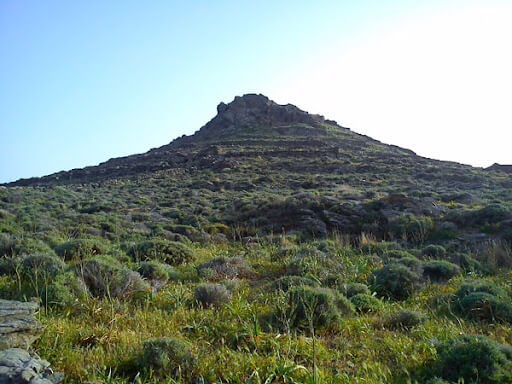
A prehistoric fortified settlement, the oldest that has been identified in Tinos. Shells that have been found in surface surveys testify to the area being inhabited since the Early Bronze Age (3000-2300 BC)
In the Middle Cycladic (or Middle Bronze Age 2300-1600 BC) the settlement was better organized and the top of the hill was fortified with a strong wall, the ruins of which are visible.
After the collapse of the palatial centers of the Minoan civilization, the settlement was gradually abandoned in favor of other places. It is located at the end of the beach of Agios Fokas
Temple of Poseidon
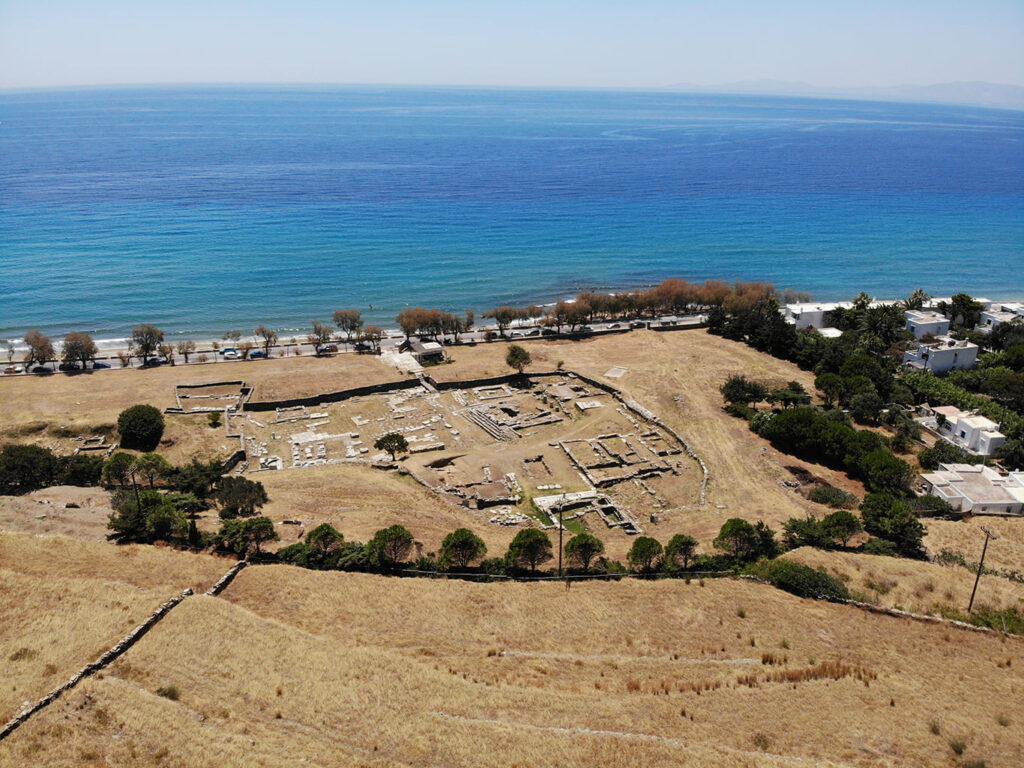
The original temple (end of the 4th century BC) was a rectangular building with two interior spaces, the pronaos and the main temple (nave). At the beginning of the 2nd c. BC, it is replaced by a larger Doric style temple that housed the supernatural statues of Poseidon and Amphitrite, works of the Athenian sculptor Telesinos. The sanctuary maintained its splendor during the Roman times and until the middle of the 3rd century AD when it was abandoned.
After the abandonment the sculptural and architectural members of the sanctuary served for centuries as building material, and one can still see embedded inscribed plaques and other pieces from the sanctuary in old houses of the Chora or villages. It is located on the beach of Kionia
The holy church of Evangelistria of Tinos (Panagia Tinou)
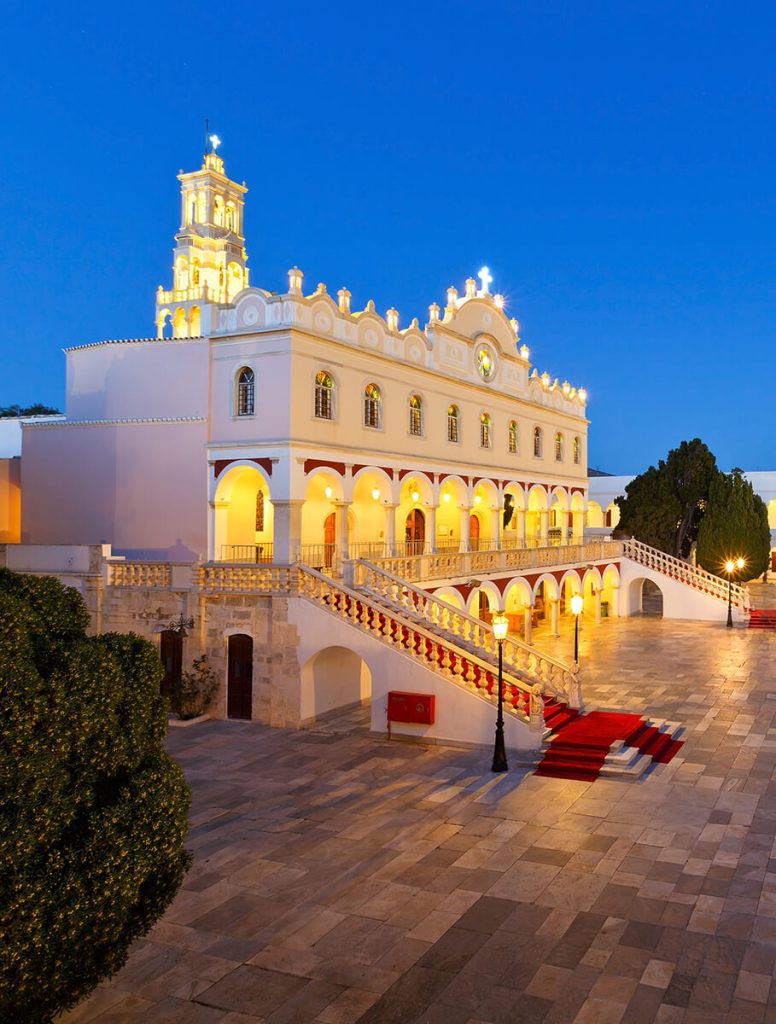
The Holy Church of Evangelistria of Tinos or Panagia of Tinos, is an orthodox church of the 19th century in Tinos ,which was built according to the plans of the architect Efstratios Kalonaris from Smyrna. The philanthropic and public benefit institution called the Panhellenic Holy Foundation of Evangelistria of Tinos also operates in the building complex. The church is the largest Orthodox pilgrimage in Greece. The church of Panagia of Tinos was built on the spot where the icon of Panagia was found, according to religious tradition after related visions of the nun Agia Pelagia. The icon was discovered after excavations on January 30, 1823 and preceded by excavations in 1822 that revealed the ancient temple of Dionysos and the temple of Agios Ioannis the Forerunner. The news of finding the icon, during the period of the Greek revolution of 1821, was considered a good omen and the island was visited for this reason by Kolokotronis, Miaoulis, Nikitaras and Makrygiannis.